Welcome to the Flamel.ai Blog

Welcome to the Flamel.ai Blog

Welcome to the Flamel.ai Blog

Franchise Marketing, Social Media, And More In The World Of AIFranchise Marketing, Social Media, And More In The World Of AI

Franchise Marketing, Social Media, And More In The World Of AI.

Recently Added

Recently Added

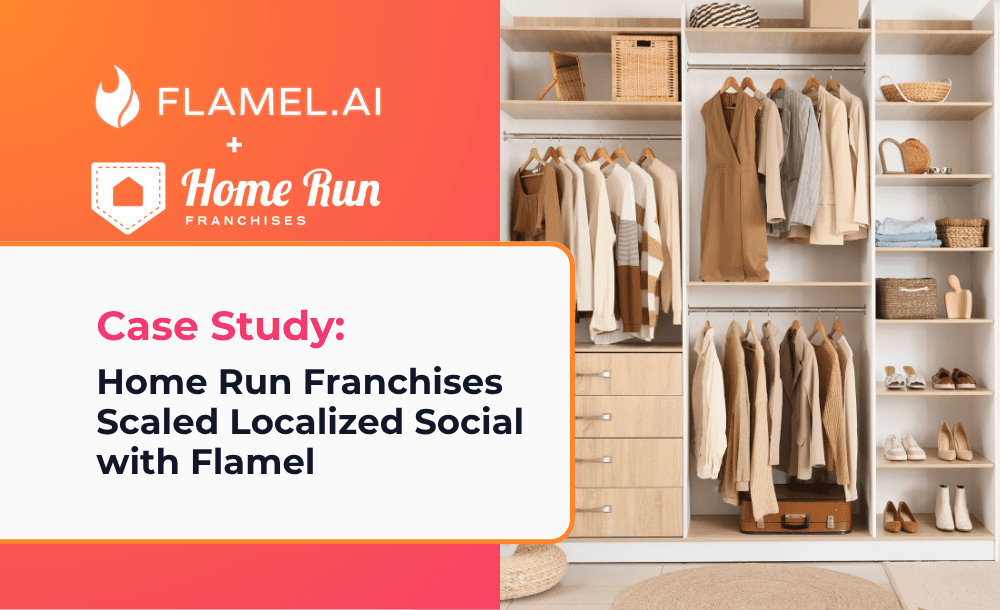
Hitting It Out of the Park: How Home Run Franchises Scaled Localized Social with Flamel

Hitting It Out of the Park: How Home Run Franchises Scaled Localized Social with Flamel

Client: Home Run Franchises is a home‑service franchise portfolio that includes Up Closets, Dryer Vent Superheroes and The Lighting Squad. The company’s mission is to “help people start amazing home‑based franchise businesses” by offering low‑cost franchise opportunities that give owners the flexibility to grow their own businesses. With a focus on accessible, home‑service brands, Home Run believes franchising should be affordable and that anyone can become a multi‑unit owner.


Services Provided: Home Run used Flamel’s localized organic‑social platform for their Dryer Vent Superheroes and Up Closets locations for a year.


The Challenge: Scaling Social While Keeping It Local


Home Run’s brands are driven by local service, so each franchisee needs to tell its own story while remaining true to brand guidelines. As their network grows, manually creating and scheduling posts for every location was becoming increasingly difficult. More specifically, their corporate team faced four problems:


  • Inconsistent franchisee posting: Home Run’s franchisees were busy running their own companies, so naturally, they didn’t have the time or resources to create great social media content. This was a huge marketing gap for Home Run, at both the national and local levels.

  • Consistency vs. customization: Localized marketing has a clear, measurable upside for franchise brands across engagement, conversion and same‑store sales growth, but manually localizing content risks off‑brand posts or inconsistent messaging.

  • Resource constraints: With a small marketing team supporting multiple brands, there were not enough hours to craft uniquely localized content for every franchisee each week.

  • Limited visibility: Without granular analytics, the team couldn’t easily identify top‑performing content or measure how local posts drove impressions, engagement and revenue.


The Solution: Flamel’s Organic Social Platform


To address these challenges, Home Run implemented Flamel’s localized organic social‑media platform across its franchise locations. The platform offers:


  • Top Performing Content Library: A repository of the best‑performing social posts across franchise networks, allowing franchisees to repurpose and localize highly‑engagement videos and image posts.

  • AI‑powered social management: Custom post ideas, creative templates and automated scheduling tools reduce manual workload for corporate and franchisees.

  • BrandCheck AI ensures consistency: Automated brand‑compliance checks ensure every post aligns with Home Run’s voice and styles, maintaining integrity across their brands.

  • Granular analytics: Detailed reporting surfaces keywords, hashtags and granular metrics that other tools often miss. Franchisees gain real‑time visibility into audience growth, engagement and earned media value, telling them a monetary growth metric that their posts have generated.


The Results: A Franchise Network With Fire Results


Over roughly a year, Home Run Franchises saw dramatic network‑wide growth on their organic social channels:


Metric (Network‑wide)

Change

Total audience (followers)

+305%

Total activity (posts)

+268%

Total impressions

+35%

Total engagement (likes, comments)

+90%

Earned media value (fEMV)

+35%


These numbers represent the cumulative impact of nearly a year of Flamel‑powered organic social media across Home Run’s brands. In practice, this translated into:


  • Exponential audience growth: Followers grew more than 300%, proving that a coordinated, AI‑driven content strategy could dramatically expand each location’s reach.

  • Higher posting cadence without extra effort: Franchisees published 268% more posts thanks to automated scheduling and easy-to-use, ready‑made templates.

  • Stronger engagement: Nearly 90% growth in interactions shows that content was resonating locally, in addition to reaching more people.

  • Real value from organic: Flamel’s calculations estimate over $1.5k in earned media value, demonstrating that organic social delivered measurable brand value.


What It Means for Home Run Franchising Marketing


Flamel didn’t just deliver bigger numbers. It more profoundly changed how Home Run’s marketing team and franchisees work together on their social media presences. Now, using AI to power their franchisees’ social accounts, Home Run Franchises has: 


  • More time for strategy: With content ideation, scheduling and analytics automated, the corporate team can focus on higher‑level strategy and creative testing, rather than post creation or moderation.

  • Empowered franchisees: Each franchisee gained easy access to proven content and clear analytics. They could publish localized posts confidently and quickly, freeing time to serve customers and grow their business in-store, rather than marketing it online.

  • Data‑driven decisions: Granular metrics helped the team understand which themes, hashtags and creative formats resonated in each market. This informed future content and cross‑promotional campaigns.


Alex Gilleland, Brand Manager for Dryer Vent Superheroes, notes that Flamel has reshaped his day‑to‑day work:

“Before Flamel, much of my time was spent chasing down content and manually tailoring posts for each franchise. Now, I spend more time analyzing what works and replicating that success across the portfolio. Watching our audience grow by over 300%, and seeing engagement nearly double, proves that when you combine localized creativity with AI‑powered efficiency, you get results that truly move the needle.” 


Takeaways for Franchisors


Home Run Franchises’ experience highlights the power of localized organic social for multi‑location brands. When investing in local marketing at scale, franchises can expect the following from the right tools: 


  • Balanced scale with local relevance: You can achieve system‑wide growth while giving each location its own voice. Tools like Flamel’s Top Performing Content Library make it easy to repurpose successful posts. BrandCheck AI ensures all posts—even new ones—adhere to brand guidelines.

  • Robust analytics: Detailed metrics on keywords, sentiment, hashtags and earned media value help franchisors and franchisees understand what resonates locally and adjust their strategies.

  • Automation freeing up time: AI‑powered scheduling and brand‑compliance tools give teams the capacity to support dozens of locations without sacrificing quality or their own time.

  • Localized marketing drives revenue: As this very case study notes, localized marketing triples engagement and boosts revenue per location. Home Run’s 300%+ growth in followers and 90% growth in engagement both demonstrate the compounding effect of local organic social that’s done right.


Looking ahead, Home Run plans to continue leveraging Flamel across its brands to support new franchisees and deepen community connections. As their franchise portfolio grows, the Home Run team knows it has the tools to keep every location’s social presence as strong and authentic as the businesses themselves.


Want to see how Flamel’s organic social tools will help your brand grow? Schedule a demo with us.

Case Studies

Mar 26, 2026

Hitting It Out of the Park: How Home Run Franchises Scaled Localized Social with Flamel

Hitting It Out of the Park: How Home Run Franchises Scaled Localized Social with Flamel

Client: Home Run Franchises is a home‑service franchise portfolio that includes Up Closets, Dryer Vent Superheroes and The Lighting Squad. The company’s mission is to “help people start amazing home‑based franchise businesses” by offering low‑cost franchise opportunities that give owners the flexibility to grow their own businesses. With a focus on accessible, home‑service brands, Home Run believes franchising should be affordable and that anyone can become a multi‑unit owner.


Services Provided: Home Run used Flamel’s localized organic‑social platform for their Dryer Vent Superheroes and Up Closets locations for a year.


The Challenge: Scaling Social While Keeping It Local


Home Run’s brands are driven by local service, so each franchisee needs to tell its own story while remaining true to brand guidelines. As their network grows, manually creating and scheduling posts for every location was becoming increasingly difficult. More specifically, their corporate team faced four problems:


  • Inconsistent franchisee posting: Home Run’s franchisees were busy running their own companies, so naturally, they didn’t have the time or resources to create great social media content. This was a huge marketing gap for Home Run, at both the national and local levels.

  • Consistency vs. customization: Localized marketing has a clear, measurable upside for franchise brands across engagement, conversion and same‑store sales growth, but manually localizing content risks off‑brand posts or inconsistent messaging.

  • Resource constraints: With a small marketing team supporting multiple brands, there were not enough hours to craft uniquely localized content for every franchisee each week.

  • Limited visibility: Without granular analytics, the team couldn’t easily identify top‑performing content or measure how local posts drove impressions, engagement and revenue.


The Solution: Flamel’s Organic Social Platform


To address these challenges, Home Run implemented Flamel’s localized organic social‑media platform across its franchise locations. The platform offers:


  • Top Performing Content Library: A repository of the best‑performing social posts across franchise networks, allowing franchisees to repurpose and localize highly‑engagement videos and image posts.

  • AI‑powered social management: Custom post ideas, creative templates and automated scheduling tools reduce manual workload for corporate and franchisees.

  • BrandCheck AI ensures consistency: Automated brand‑compliance checks ensure every post aligns with Home Run’s voice and styles, maintaining integrity across their brands.

  • Granular analytics: Detailed reporting surfaces keywords, hashtags and granular metrics that other tools often miss. Franchisees gain real‑time visibility into audience growth, engagement and earned media value, telling them a monetary growth metric that their posts have generated.


The Results: A Franchise Network With Fire Results


Over roughly a year, Home Run Franchises saw dramatic network‑wide growth on their organic social channels:


Metric (Network‑wide)

Change

Total audience (followers)

+305%

Total activity (posts)

+268%

Total impressions

+35%

Total engagement (likes, comments)

+90%

Earned media value (fEMV)

+35%


These numbers represent the cumulative impact of nearly a year of Flamel‑powered organic social media across Home Run’s brands. In practice, this translated into:


  • Exponential audience growth: Followers grew more than 300%, proving that a coordinated, AI‑driven content strategy could dramatically expand each location’s reach.

  • Higher posting cadence without extra effort: Franchisees published 268% more posts thanks to automated scheduling and easy-to-use, ready‑made templates.

  • Stronger engagement: Nearly 90% growth in interactions shows that content was resonating locally, in addition to reaching more people.

  • Real value from organic: Flamel’s calculations estimate over $1.5k in earned media value, demonstrating that organic social delivered measurable brand value.


What It Means for Home Run Franchising Marketing


Flamel didn’t just deliver bigger numbers. It more profoundly changed how Home Run’s marketing team and franchisees work together on their social media presences. Now, using AI to power their franchisees’ social accounts, Home Run Franchises has: 


  • More time for strategy: With content ideation, scheduling and analytics automated, the corporate team can focus on higher‑level strategy and creative testing, rather than post creation or moderation.

  • Empowered franchisees: Each franchisee gained easy access to proven content and clear analytics. They could publish localized posts confidently and quickly, freeing time to serve customers and grow their business in-store, rather than marketing it online.

  • Data‑driven decisions: Granular metrics helped the team understand which themes, hashtags and creative formats resonated in each market. This informed future content and cross‑promotional campaigns.


Alex Gilleland, Brand Manager for Dryer Vent Superheroes, notes that Flamel has reshaped his day‑to‑day work:

“Before Flamel, much of my time was spent chasing down content and manually tailoring posts for each franchise. Now, I spend more time analyzing what works and replicating that success across the portfolio. Watching our audience grow by over 300%, and seeing engagement nearly double, proves that when you combine localized creativity with AI‑powered efficiency, you get results that truly move the needle.” 


Takeaways for Franchisors


Home Run Franchises’ experience highlights the power of localized organic social for multi‑location brands. When investing in local marketing at scale, franchises can expect the following from the right tools: 


  • Balanced scale with local relevance: You can achieve system‑wide growth while giving each location its own voice. Tools like Flamel’s Top Performing Content Library make it easy to repurpose successful posts. BrandCheck AI ensures all posts—even new ones—adhere to brand guidelines.

  • Robust analytics: Detailed metrics on keywords, sentiment, hashtags and earned media value help franchisors and franchisees understand what resonates locally and adjust their strategies.

  • Automation freeing up time: AI‑powered scheduling and brand‑compliance tools give teams the capacity to support dozens of locations without sacrificing quality or their own time.

  • Localized marketing drives revenue: As this very case study notes, localized marketing triples engagement and boosts revenue per location. Home Run’s 300%+ growth in followers and 90% growth in engagement both demonstrate the compounding effect of local organic social that’s done right.


Looking ahead, Home Run plans to continue leveraging Flamel across its brands to support new franchisees and deepen community connections. As their franchise portfolio grows, the Home Run team knows it has the tools to keep every location’s social presence as strong and authentic as the businesses themselves.


Want to see how Flamel’s organic social tools will help your brand grow? Schedule a demo with us.

Case Studies

Mar 26, 2026

From Search to GEO: Preparing Multi‑Location Franchises for AI‑Driven Discovery in 2026

From Search to GEO: Preparing Multi‑Location Franchises for AI‑Driven Discovery in 2026

Search is no longer a static list of links, as it’s becoming predictive. Recent trends show that generative AI models will anticipate customer needs, and the brands they cite are the ones that will be visible. Franchisors may feel overwhelmed by these updates, but focusing on fundamentals will ensure AI assistants recognize and recommend your brand.


AI‑powered search is a fundamental shift in how people will discover brands and make decisions. In Flamel AI’s 2026 Franchise Marketing Guide Book Tim Vogel, founder and CEO of Scenthound, argues that search is moving from reactive to predictive, where AI suggests what customers need before they even type a query. 


He notes that this evolution “puts huge importance on GEO and local relevance” because franchises must become the brand AI recommends when someone asks for help nearby.


This blog explains, in plain language, how AI is changing search and why Generative Engine Optimization (GEO) and local signals matter. Read on to learn about the concise steps to align your multi‑location marketing with the new predictive environment.


How is AI changing search?


Traditional Search Engine Optimization (SEO) focuses on keywords, links and technical factors that influence a ranking on Google’s results page. In local SEO, businesses also signal which cities they serve using consistent name‑address‑phone (NAP) data and Google Business Profiles


Nowadays though, AI is changing this model.


AI tools don’t just return a list of links, but rather they answer questions directly. When AI‑generated overviews appear, users are nearly 50% less likely to click on the organically surfaced links below the AI overview. Already, consumer behaviors are showing GEO will replace traditional SEO. 


Discovery now happens across multiple platforms and interfaces. Brand visibility hinges on being referenced by trusted sources, not just ranking high. We also know that local relevance is one of the strongest trust signals AI uses to recommend businesses, so franchises must balance their national presence with detailed, local representation.


Ultimately, GEO is the practice of making your brand easy for AI to cite. AI rewards brands that are consistent, trustworthy and locally credible. In fact, the International Franchise Association (IFA) notes that AI evaluates a brand’s Experience, Expertise, Authoritativeness and Trustworthiness (E‑E‑A‑T) across your website, social profiles and local listings, favoring content that’s easy to parse with clear headlines, bulleted lists and short paragraphs.


With all of this information in mind—and all of the changes that lie ahead—here are tips on how to get both your traditional SEO and new GEO tactics competitive for franchise marketing in 2026.


6 Tips to Prepare Your Franchise for Predictive, Local AI Search


Tip #1: Master the Local Basics


Claim and optimize a Google Business Profile for every location and make sure your name, address and phone number are accurate for every listing, and across every medium—on your website, directories and social profiles. 


Active, well‑maintained Google Business Profiles and city‑specific pages with original content are key local signals. Encourage franchisees to add photos, respond to reviews and update hours. These basics help AI understand where you operate and which searchers you can serve.


Tip #2: Make Content Clear & Authoritative


Generative engines prefer straightforward answers, and we know that AI favors clear headlines, bulleted lists, short paragraphs and Q&A formats. Write content for your webpages, blog and FAQs page that answers one question at a time and avoids vague marketing language. 


For each service you offer, publish a page that defines the service, explains how it works and answers common questions. Use structured data (like FAQ schema) so AI can extract your answers easily.


Tip #3: Earn & Show Trust


AI models assess your E‑E‑A‑T profile. Share real stories through your online presence, such as case studies, testimonials, awards and media coverage. Small updates like adding testimonials or awards help AI and search engines recognize your brand. Specific data—such as years in business, certifications, response times or project counts—makes content cite‑worthy. 


Gather local awards and customer stories to show AI (and people) that you’re trustworthy.


Tip #4: Be Consistent & Present Across Channels


GEO isn’t just about marketing your website. Now, consumers begin their research on your brand across multiple platforms, so discovery no longer centers on a single search engine. 


Maintain consistent messaging across your national site, local pages, social profiles and paid ads. Repurpose content for video, social and podcasts. Brands that appear across websites, social platforms, paid media and review sites provide AI with the context needed to establish trust. Consistency in your brand name, services and locations helps AI categorize you correctly and serve your shops up to consumers.


Tip #5: Collect Clean, Consented Data


As third‑party cookies disappear, rely on data you collect directly from customers. Trust, transparency and ownership of data become competitive advantages, so treat them as such by offering customers and followers to interact with your brand across multiple touchpoints. 


Encourage customers to sign up for loyalty programs or newsletters and to share preferences through surveys (zero‑party data). Clean data not only protects your brand but also provides the AI tools you use with reliable signals about who your customers are and what they need.


Tip #6: Iterate & Upskill


Predictive search will continue to evolve. We recommend auditing your social media content and monitoring competitors regularly. Test different content formats—video posts, long-form blogs and update announcements—across digital platforms to see where AI pulls your information. 


On the internal side, offer training so your marketing team and franchisees understand how generative search works and how to create content that both humans and AI can digest. To make things a little simpler though, here’s a checklist of what to update and when, in order to stay top-of-mind for AI search.


Daily / Weekly Activities


  • Post on social media: Share photos, short videos, customer moments or promotions. AI systems learn about brands from social activity and engagement.

  • Respond to reviews: Reply to every Google review (good or bad). Thank positive reviewers and address concerns professionally.

  • Answer questions on Google Business Profile: Monitor the Q&A section and answer customer questions quickly.

  • Share customer photos or user-generated content: Repost customers’ tagged photos or testimonials. AI uses real-world signals to understand brand popularity.


Weekly / Biweekly Activities


  • Add new photos to Google Business Profile: Storefront photos, team photos, product/service photos, event photos

  • Publish a short local social post: Community events, local partnerships, staff highlights, local promotions

  • Encourage new reviews: Ask customers in person for reviews. Use QR codes.Send follow-up emails or texts.


Monthly Activities


  • Publish one local content update: Blog posts, local service page update, community recaps, FAQ update

  • Highlight customer stories on social media: Before/after photos, case studies, testimonials

  • Check directory listings: Ensure your name, address, and phone number (NAP) are correct on Google, Yelp, Apple Maps, Facebook and local directories


Quarterly Activities


  • Update location pages on your website, as needed: Add new photos, updated services and staff highlights

  • Refresh FAQs, as needed: AI loves pulling answers from clear FAQ content.

  • Share a milestone on social media: Anniversaries, community partnerships, charity events and awards


AI Search Is
Already All About Local Listing


Generative AI is transforming how people discover businesses. Being visible in this new landscape means building on solid SEO foundations—clear, consistent content; accurate local listings; and trustworthy signals—while expanding your presence across multiple platforms and collecting data responsibly. 


By adopting the practices outlined above, multi‑location franchisors can ensure that when AI assistants make recommendations in 2026, their brand is the one that gets cited. And those who adapt early will turn predictive search from a challenge into an advantage.


Want to optimize each of your franchise location’s Google Business Profile listings? Check out Flamel’s reputation management tools.

AI & Automation

Mar 6, 2026

From Search to GEO: Preparing Multi‑Location Franchises for AI‑Driven Discovery in 2026

From Search to GEO: Preparing Multi‑Location Franchises for AI‑Driven Discovery in 2026

Search is no longer a static list of links, as it’s becoming predictive. Recent trends show that generative AI models will anticipate customer needs, and the brands they cite are the ones that will be visible. Franchisors may feel overwhelmed by these updates, but focusing on fundamentals will ensure AI assistants recognize and recommend your brand.


AI‑powered search is a fundamental shift in how people will discover brands and make decisions. In Flamel AI’s 2026 Franchise Marketing Guide Book Tim Vogel, founder and CEO of Scenthound, argues that search is moving from reactive to predictive, where AI suggests what customers need before they even type a query. 


He notes that this evolution “puts huge importance on GEO and local relevance” because franchises must become the brand AI recommends when someone asks for help nearby.


This blog explains, in plain language, how AI is changing search and why Generative Engine Optimization (GEO) and local signals matter. Read on to learn about the concise steps to align your multi‑location marketing with the new predictive environment.


How is AI changing search?


Traditional Search Engine Optimization (SEO) focuses on keywords, links and technical factors that influence a ranking on Google’s results page. In local SEO, businesses also signal which cities they serve using consistent name‑address‑phone (NAP) data and Google Business Profiles


Nowadays though, AI is changing this model.


AI tools don’t just return a list of links, but rather they answer questions directly. When AI‑generated overviews appear, users are nearly 50% less likely to click on the organically surfaced links below the AI overview. Already, consumer behaviors are showing GEO will replace traditional SEO. 


Discovery now happens across multiple platforms and interfaces. Brand visibility hinges on being referenced by trusted sources, not just ranking high. We also know that local relevance is one of the strongest trust signals AI uses to recommend businesses, so franchises must balance their national presence with detailed, local representation.


Ultimately, GEO is the practice of making your brand easy for AI to cite. AI rewards brands that are consistent, trustworthy and locally credible. In fact, the International Franchise Association (IFA) notes that AI evaluates a brand’s Experience, Expertise, Authoritativeness and Trustworthiness (E‑E‑A‑T) across your website, social profiles and local listings, favoring content that’s easy to parse with clear headlines, bulleted lists and short paragraphs.


With all of this information in mind—and all of the changes that lie ahead—here are tips on how to get both your traditional SEO and new GEO tactics competitive for franchise marketing in 2026.


6 Tips to Prepare Your Franchise for Predictive, Local AI Search


Tip #1: Master the Local Basics


Claim and optimize a Google Business Profile for every location and make sure your name, address and phone number are accurate for every listing, and across every medium—on your website, directories and social profiles. 


Active, well‑maintained Google Business Profiles and city‑specific pages with original content are key local signals. Encourage franchisees to add photos, respond to reviews and update hours. These basics help AI understand where you operate and which searchers you can serve.


Tip #2: Make Content Clear & Authoritative


Generative engines prefer straightforward answers, and we know that AI favors clear headlines, bulleted lists, short paragraphs and Q&A formats. Write content for your webpages, blog and FAQs page that answers one question at a time and avoids vague marketing language. 


For each service you offer, publish a page that defines the service, explains how it works and answers common questions. Use structured data (like FAQ schema) so AI can extract your answers easily.


Tip #3: Earn & Show Trust


AI models assess your E‑E‑A‑T profile. Share real stories through your online presence, such as case studies, testimonials, awards and media coverage. Small updates like adding testimonials or awards help AI and search engines recognize your brand. Specific data—such as years in business, certifications, response times or project counts—makes content cite‑worthy. 


Gather local awards and customer stories to show AI (and people) that you’re trustworthy.


Tip #4: Be Consistent & Present Across Channels


GEO isn’t just about marketing your website. Now, consumers begin their research on your brand across multiple platforms, so discovery no longer centers on a single search engine. 


Maintain consistent messaging across your national site, local pages, social profiles and paid ads. Repurpose content for video, social and podcasts. Brands that appear across websites, social platforms, paid media and review sites provide AI with the context needed to establish trust. Consistency in your brand name, services and locations helps AI categorize you correctly and serve your shops up to consumers.


Tip #5: Collect Clean, Consented Data


As third‑party cookies disappear, rely on data you collect directly from customers. Trust, transparency and ownership of data become competitive advantages, so treat them as such by offering customers and followers to interact with your brand across multiple touchpoints. 


Encourage customers to sign up for loyalty programs or newsletters and to share preferences through surveys (zero‑party data). Clean data not only protects your brand but also provides the AI tools you use with reliable signals about who your customers are and what they need.


Tip #6: Iterate & Upskill


Predictive search will continue to evolve. We recommend auditing your social media content and monitoring competitors regularly. Test different content formats—video posts, long-form blogs and update announcements—across digital platforms to see where AI pulls your information. 


On the internal side, offer training so your marketing team and franchisees understand how generative search works and how to create content that both humans and AI can digest. To make things a little simpler though, here’s a checklist of what to update and when, in order to stay top-of-mind for AI search.


Daily / Weekly Activities


  • Post on social media: Share photos, short videos, customer moments or promotions. AI systems learn about brands from social activity and engagement.

  • Respond to reviews: Reply to every Google review (good or bad). Thank positive reviewers and address concerns professionally.

  • Answer questions on Google Business Profile: Monitor the Q&A section and answer customer questions quickly.

  • Share customer photos or user-generated content: Repost customers’ tagged photos or testimonials. AI uses real-world signals to understand brand popularity.


Weekly / Biweekly Activities


  • Add new photos to Google Business Profile: Storefront photos, team photos, product/service photos, event photos

  • Publish a short local social post: Community events, local partnerships, staff highlights, local promotions

  • Encourage new reviews: Ask customers in person for reviews. Use QR codes.Send follow-up emails or texts.


Monthly Activities


  • Publish one local content update: Blog posts, local service page update, community recaps, FAQ update

  • Highlight customer stories on social media: Before/after photos, case studies, testimonials

  • Check directory listings: Ensure your name, address, and phone number (NAP) are correct on Google, Yelp, Apple Maps, Facebook and local directories


Quarterly Activities


  • Update location pages on your website, as needed: Add new photos, updated services and staff highlights

  • Refresh FAQs, as needed: AI loves pulling answers from clear FAQ content.

  • Share a milestone on social media: Anniversaries, community partnerships, charity events and awards


AI Search Is
Already All About Local Listing


Generative AI is transforming how people discover businesses. Being visible in this new landscape means building on solid SEO foundations—clear, consistent content; accurate local listings; and trustworthy signals—while expanding your presence across multiple platforms and collecting data responsibly. 


By adopting the practices outlined above, multi‑location franchisors can ensure that when AI assistants make recommendations in 2026, their brand is the one that gets cited. And those who adapt early will turn predictive search from a challenge into an advantage.


Want to optimize each of your franchise location’s Google Business Profile listings? Check out Flamel’s reputation management tools.
AI & Automation

Mar 6, 2026

The Hidden Value of Franchising: Mobility Engines, Founder Factories & Community Anchors

The Hidden Value of Franchising: Mobility Engines, Founder Factories & Community Anchors

Most people still picture fast-food when they hear the word “franchise.” Yet fast-food accounts for only about a quarter of U.S. franchise establishments today. Three-quarters of the sector now spans business services, residential services, lodging, personal services, retail and more. And these businesses are quietly shaping how Americans work, start companies and build local communities.​


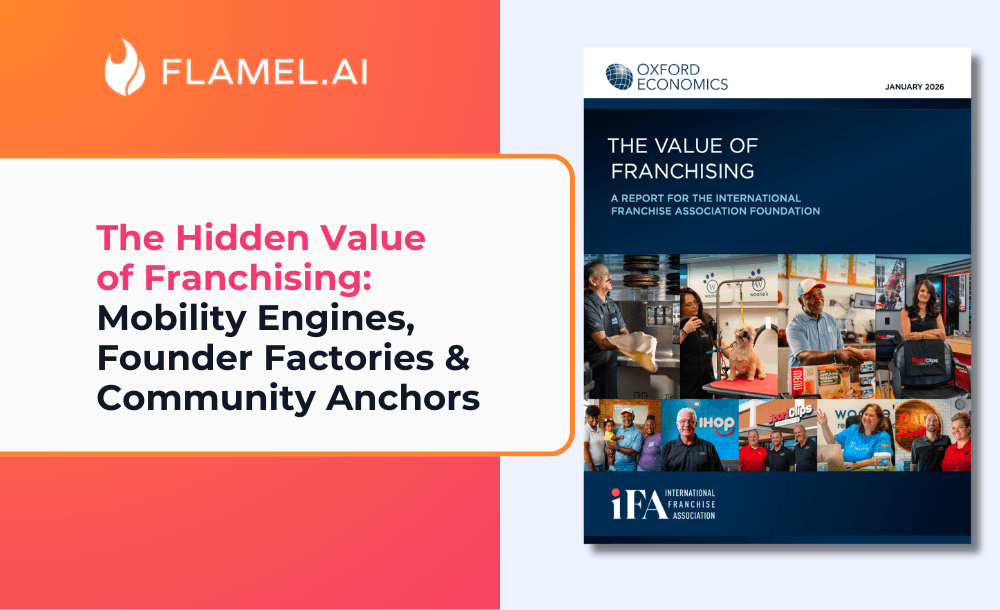
A new 2026 report by Oxford Economics for the International Franchise Association Foundation puts hard numbers behind something industry insiders have known for years. Franchising is one of the most powerful and misunderstood engines of opportunity in the U.S. economy.​


Exploring 5 Unique Superpowers of Franchising

Franchising is a massive but underappreciated economic engine.


Franchising is no niche model. In 2024, U.S. franchise establishments generated about 550 billion in GDP and employed nearly 8.8 million people—roughly 5.5% of all U.S. employment. There were more than 830,000 franchise establishments nationwide, cutting across almost every sector of the economy.​


And it’s growing faster than the broader market. Between 2021 and 2024, franchise employment grew 7.3%, outpacing similar sectors of the economy at 6.7%. Franchise GDP is projected to grow 5% annually, versus about 1.4% for the U.S. GDP.​


Franchising offers better jobs, faster progression and stronger retention.


One of the most striking findings in the report is about job quality. Using anonymized data from Paychex payroll records, researchers compared franchises with similar non-franchise small businesses, controlling for industry, location, firm size, tenure and more.​


Key findings:​

  • Wages at franchised and non-franchised businesses are essentially on par once you control for comparable characteristics, but wages tend to grow faster over time for franchise employees.

  • Retention is materially better in franchising. In the second month after hire, non-franchise employees were 16% more likely to leave than franchise employees, rising to 34% in month six and 49% by month twelve.​

  • Part-time workers at franchises move up faster. In the second month after initial employment, part-time franchise employees were about 20% more likely to switch to full-time roles than similar non-franchise workers, with that effect persisting over the first year (even if later estimates lose statistical significance).​


Benefits are where the gap really shows up. Working at a franchised business was associated with a 37% point higher likelihood of receiving key benefits compared to working at a comparable non-franchised business. Franchise employees were:​

  • 6.5% points more likely to receive paid sick leave

  • 5.7% points more likely to receive health insurance


Survey data from franchisees echo this too. An estimated 58% of franchise workers have access to employer health insurance and around 73% receive paid vacation, holiday and sick leave—meeting or beating coverage rates at small establishments more broadly.​


In other words, the “fissured workplace” critique doesn’t hold up cleanly when you look at the data. Franchises look a lot like (and often better than) comparable local independent businesses on pay—and they outperform them on upward mobility and benefits.​


Franchising offers a powerful on-ramp for first-time, diverse entrepreneurs.


Franchising also serves as a founder factory, especially for people who might otherwise never start a business. In an Oxford Economics survey of nearly 3,000 franchisees (covering more than 13,000 establishments):​


  • 64% said their franchise is the first business they have ever owned.​

  • 30% said they would not own a business at all if they were not franchisees.​


When you scale that out to the full U.S. franchise population, the researchers estimate that without the franchise model, the U.S. would have roughly:​


  • 80,000 fewer businesses

  • 215,500 fewer local franchise establishments

  • 4 million fewer jobs

That “I wouldn’t be a business owner without franchising” sentiment is especially concentrated among women, first-time owners and single-unit operators.​


The model is also meaningfully more diverse than the independent small-business universe. Using the Census’ 2023 Annual Business Survey, the report finds:​


  • About 26% of franchise businesses are owned by people of color, versus about 19% of non-franchised businesses.

  • Franchise firms tend to be larger. Overall, franchises report sales about 1.4X higher and employment about 2.1X higher than non-franchised businesses.​

  • For Black American owners, franchise firms earned about 2.3X as much in sales as Black-owned non-franchise firms. 

  • Among veteran owners, franchise firms earned 2.7X as much as veteran-owned non-franchise businesses.​


Why? Franchisees plug into an existing brand, playbook and peer network. In the survey, the most valuable types of franchisor support cited were:​

  • Access to a network of other franchisees (65% said it’s “very important”)

  • Franchisee training (64% said that’s “very important”)

  • Technology platforms for marketing, operations and data (64% also said “very important”)


For first-time owners and women, access to the brand’s franchisee network was even more critical. This combination of brand, training and systems effectively lowers the barrier to entry for capable operators who don’t have deep capital, connections or time to invent a concept from scratch.​


Franchises are locally owned, locally embedded and locally generous.


Despite the national brands on the sign, the report underscores that most franchisees are deeply local operators. About 85% of franchisees surveyed own and operate businesses in the town or region where they live. They hire local workers, buy from local suppliers and give to local causes.​


Some standout numbers are as follows:​

  • On average, franchisees purchase about 40% of their inputs from local suppliers. And over half purchase at least 25% locally.

  • About 83% of franchisees donated to local charities in the prior year.

  • Aggregated nationally, U.S. franchisees donated an estimated $2.3 billion to charity, raised $2.6 billion and sponsored roughly 34 million hours of volunteer activity in the last financial year.​

  • The average franchise business donated over 12,000, raised about 14,000 more and sponsored around 190 hours of staff volunteering in a single year.​


The report cites research on brands like McDonald’s showing that franchise systems are often deliberately structured to leave a meaningful share of profits in the hands of local owner-operators, keeping income and wealth in the communities where those businesses operate, rather than fully centralizing it at headquarters.​


Franchising is an evergreen, 300-year-old growth hack.


The report traces the model all the way back to an early franchise agreement in 1731 between Benjamin Franklin and Thomas Whitmarsh for a printing shop. The core logic hasn’t changed. An anchor brand pairs its IP and systems with local owner-operators who have skin in the game and know their markets intimately.​


Modern research backs this structure.  Brands often franchise units that are geographically distant or in unfamiliar markets because local knowledge and owner incentives matter more there. Franchise and company-owned units often coexist in “plural” systems, balancing standardization with local experimentation.​


In practice, franchising has become a way to scale trusted experiences—whether quick service, education, professional services, fitness or home services—while still harnessing local entrepreneurial energy.


What does the future of franchising look like?


Taken together, the evidence in this report is hard to ignore:​

  • For workers, franchises offer similar pay, stronger retention, faster progression from part-time to full-time and better access to benefits than comparable non-franchise small businesses.

  • For founders, franchising is a critical on-ramp—especially for first-time owners, women, veterans and entrepreneurs of color—unlocking higher sales and headcount than typical independent peers.

  • For communities, franchisees behave like local small businesses, as they hire locally, buy locally and give locally at a serious scale.


As policymakers debate labor standards, small-business support and how to expand entrepreneurship to underrepresented groups, this report suggests that protecting and strengthening the franchise model is less about defending “big brands” and more about backing a distributed network of local employers and owners.


As we look ahead at 2026’s mobility, inclusion and resilient local economies, franchising deserves to be part of the conversation.

Guides & Webinars

Feb 12, 2026

The Hidden Value of Franchising: Mobility Engines, Founder Factories & Community Anchors

The Hidden Value of Franchising: Mobility Engines, Founder Factories & Community Anchors

Most people still picture fast-food when they hear the word “franchise.” Yet fast-food accounts for only about a quarter of U.S. franchise establishments today. Three-quarters of the sector now spans business services, residential services, lodging, personal services, retail and more. And these businesses are quietly shaping how Americans work, start companies and build local communities.​


A new 2026 report by Oxford Economics for the International Franchise Association Foundation puts hard numbers behind something industry insiders have known for years. Franchising is one of the most powerful and misunderstood engines of opportunity in the U.S. economy.​


Exploring 5 Unique Superpowers of Franchising

Franchising is a massive but underappreciated economic engine.


Franchising is no niche model. In 2024, U.S. franchise establishments generated about 550 billion in GDP and employed nearly 8.8 million people—roughly 5.5% of all U.S. employment. There were more than 830,000 franchise establishments nationwide, cutting across almost every sector of the economy.​


And it’s growing faster than the broader market. Between 2021 and 2024, franchise employment grew 7.3%, outpacing similar sectors of the economy at 6.7%. Franchise GDP is projected to grow 5% annually, versus about 1.4% for the U.S. GDP.​


Franchising offers better jobs, faster progression and stronger retention.


One of the most striking findings in the report is about job quality. Using anonymized data from Paychex payroll records, researchers compared franchises with similar non-franchise small businesses, controlling for industry, location, firm size, tenure and more.​


Key findings:​

  • Wages at franchised and non-franchised businesses are essentially on par once you control for comparable characteristics, but wages tend to grow faster over time for franchise employees.

  • Retention is materially better in franchising. In the second month after hire, non-franchise employees were 16% more likely to leave than franchise employees, rising to 34% in month six and 49% by month twelve.​

  • Part-time workers at franchises move up faster. In the second month after initial employment, part-time franchise employees were about 20% more likely to switch to full-time roles than similar non-franchise workers, with that effect persisting over the first year (even if later estimates lose statistical significance).​


Benefits are where the gap really shows up. Working at a franchised business was associated with a 37% point higher likelihood of receiving key benefits compared to working at a comparable non-franchised business. Franchise employees were:​

  • 6.5% points more likely to receive paid sick leave

  • 5.7% points more likely to receive health insurance


Survey data from franchisees echo this too. An estimated 58% of franchise workers have access to employer health insurance and around 73% receive paid vacation, holiday and sick leave—meeting or beating coverage rates at small establishments more broadly.​


In other words, the “fissured workplace” critique doesn’t hold up cleanly when you look at the data. Franchises look a lot like (and often better than) comparable local independent businesses on pay—and they outperform them on upward mobility and benefits.​


Franchising offers a powerful on-ramp for first-time, diverse entrepreneurs.


Franchising also serves as a founder factory, especially for people who might otherwise never start a business. In an Oxford Economics survey of nearly 3,000 franchisees (covering more than 13,000 establishments):​


  • 64% said their franchise is the first business they have ever owned.​

  • 30% said they would not own a business at all if they were not franchisees.​


When you scale that out to the full U.S. franchise population, the researchers estimate that without the franchise model, the U.S. would have roughly:​


  • 80,000 fewer businesses

  • 215,500 fewer local franchise establishments

  • 4 million fewer jobs

That “I wouldn’t be a business owner without franchising” sentiment is especially concentrated among women, first-time owners and single-unit operators.​


The model is also meaningfully more diverse than the independent small-business universe. Using the Census’ 2023 Annual Business Survey, the report finds:​


  • About 26% of franchise businesses are owned by people of color, versus about 19% of non-franchised businesses.

  • Franchise firms tend to be larger. Overall, franchises report sales about 1.4X higher and employment about 2.1X higher than non-franchised businesses.​

  • For Black American owners, franchise firms earned about 2.3X as much in sales as Black-owned non-franchise firms. 

  • Among veteran owners, franchise firms earned 2.7X as much as veteran-owned non-franchise businesses.​


Why? Franchisees plug into an existing brand, playbook and peer network. In the survey, the most valuable types of franchisor support cited were:​

  • Access to a network of other franchisees (65% said it’s “very important”)

  • Franchisee training (64% said that’s “very important”)

  • Technology platforms for marketing, operations and data (64% also said “very important”)


For first-time owners and women, access to the brand’s franchisee network was even more critical. This combination of brand, training and systems effectively lowers the barrier to entry for capable operators who don’t have deep capital, connections or time to invent a concept from scratch.​


Franchises are locally owned, locally embedded and locally generous.


Despite the national brands on the sign, the report underscores that most franchisees are deeply local operators. About 85% of franchisees surveyed own and operate businesses in the town or region where they live. They hire local workers, buy from local suppliers and give to local causes.​


Some standout numbers are as follows:​

  • On average, franchisees purchase about 40% of their inputs from local suppliers. And over half purchase at least 25% locally.

  • About 83% of franchisees donated to local charities in the prior year.

  • Aggregated nationally, U.S. franchisees donated an estimated $2.3 billion to charity, raised $2.6 billion and sponsored roughly 34 million hours of volunteer activity in the last financial year.​

  • The average franchise business donated over 12,000, raised about 14,000 more and sponsored around 190 hours of staff volunteering in a single year.​


The report cites research on brands like McDonald’s showing that franchise systems are often deliberately structured to leave a meaningful share of profits in the hands of local owner-operators, keeping income and wealth in the communities where those businesses operate, rather than fully centralizing it at headquarters.​


Franchising is an evergreen, 300-year-old growth hack.


The report traces the model all the way back to an early franchise agreement in 1731 between Benjamin Franklin and Thomas Whitmarsh for a printing shop. The core logic hasn’t changed. An anchor brand pairs its IP and systems with local owner-operators who have skin in the game and know their markets intimately.​


Modern research backs this structure.  Brands often franchise units that are geographically distant or in unfamiliar markets because local knowledge and owner incentives matter more there. Franchise and company-owned units often coexist in “plural” systems, balancing standardization with local experimentation.​


In practice, franchising has become a way to scale trusted experiences—whether quick service, education, professional services, fitness or home services—while still harnessing local entrepreneurial energy.


What does the future of franchising look like?


Taken together, the evidence in this report is hard to ignore:​

  • For workers, franchises offer similar pay, stronger retention, faster progression from part-time to full-time and better access to benefits than comparable non-franchise small businesses.

  • For founders, franchising is a critical on-ramp—especially for first-time owners, women, veterans and entrepreneurs of color—unlocking higher sales and headcount than typical independent peers.

  • For communities, franchisees behave like local small businesses, as they hire locally, buy locally and give locally at a serious scale.


As policymakers debate labor standards, small-business support and how to expand entrepreneurship to underrepresented groups, this report suggests that protecting and strengthening the franchise model is less about defending “big brands” and more about backing a distributed network of local employers and owners.


As we look ahead at 2026’s mobility, inclusion and resilient local economies, franchising deserves to be part of the conversation.

Guides & Webinars

Feb 12, 2026

Growing petbar’s Brand Presence With Flamel AI’s Agency

Growing petbar’s Brand Presence With Flamel AI’s Agency

Client: petbar, a rapidly growing pet‑grooming franchise with more than 30 locations in the South and Southwest.


Services Provided: Full‑service social media management, dynamic content calendars, graphic design (static, carousel and video), copywriting, email campaign creation, nurture journeys and bi‑monthly newsletters.


Timeline: Flamel AI’s agency partnered with petbar when the franchisor lacked an internal marketing team. Our team handled digital marketing until petbar hired full‑time staff, at which point the franchise marketing team continued using the Flamel organic social platform, independently.


The Big Picture: petbar’s corporate team wanted to give every franchise location a strong local voice without compromising brand integrity. With dozens of stores opening quickly, it was critical to deliver on‑brand content and promotions to national and local audiences at scale. Flamel AI’s agency stepped in to build a complete social and email program, acting as petbar’s marketing department until they could staff their own.


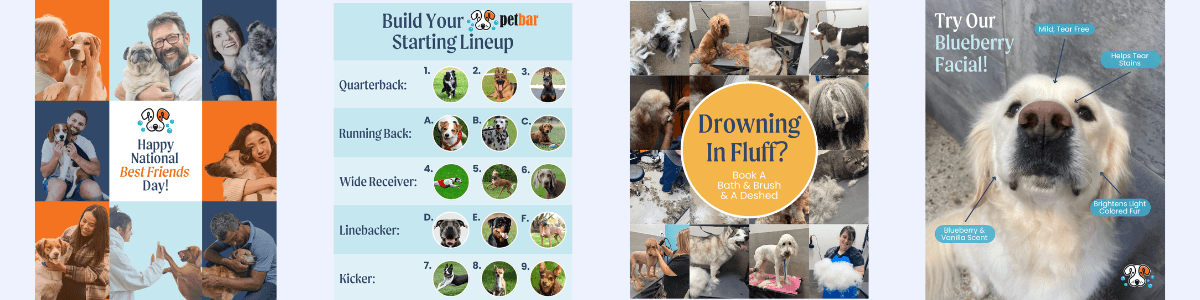
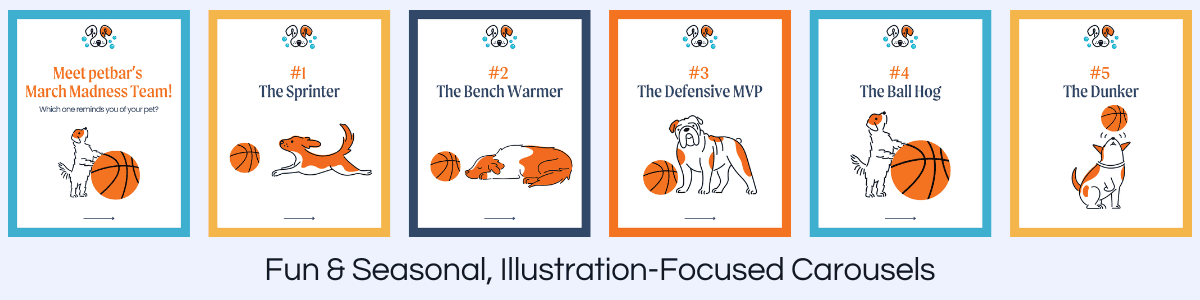
Example of social post graphic design for petbar franchisees


The Challenge: Scaling Local Engagement Without an In‑House Team


As petbar expanded, its marketing needs grew exponentially. Several challenges emerged:

  • No internal marketers: At the start of the engagement, petbar’s corporate office didn’t have dedicated marketing staff. Without someone to oversee content creation and scheduling, social feeds for the national brand and each franchise location risked becoming inconsistent or inactive.


  • Balancing national and local messaging: Franchise owners needed content that resonated with their local communities while upholding the national brand’s aesthetic and voice. Creating individualized posts, videos and captions for dozens of locations was a heavy lift for franchisees to manage on their own.


  • Email program from scratch: petbar wanted to nurture its subscriber base with automated journeys and regular newsletters, but lacked the resources to design emails, write copy and manage segmentation.


  • Seasonality and promotions: The franchise offers seasonal specials (e.g., holiday grooming packages) and evergreen services, requiring frequent creative refreshes that were aligned across all channels.


The Solution: Flamel AI’s Agency & AI‑Powered Platform


To address these challenges, Flamel AI’s agency delivered a comprehensive marketing solution that paired human creativity with AI‑assisted workflows.

Localized Social Content Creation

  • On‑brand templates & design: Our creative team produced fresh graphics, image posts, carousels and short‑form videos tailored to petbar’s playful aesthetic. Content captured the joy of pampered pets, seasonal promotions and membership benefits.

social post design example for petbar's franchise social media


  • Copywriting & brand voice consistency: Every post included unique captions using petbar’s fun, friendly tone. AI tools suggested keywords and hashtags while our copywriters ensured each caption appealed to local audiences and matched the national brand guidelines.


  • Dynamic content calendar: Using Flamel’s platform, we scheduled posts for both the franchisor and franchisee accounts, ensuring a steady cadence across Facebook and Instagram. Posts were localized by region and optimized for engagement, with franchisees receiving ready‑to‑post content they could publish in one click.


  • Video editing & motion graphics: Short videos and Reels were produced to highlight grooming transformations, seasonal fun and customer experiences. Our team handled some filming along with full editing and post‑production, so franchisees only had to share the videos they liked best.

Email Marketing & Nurture Journeys


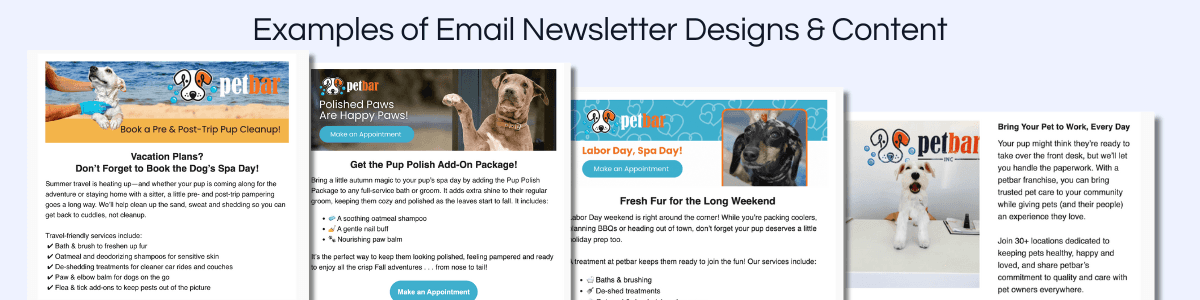
  • Bi‑monthly newsletters: Twice each month, we sent beautifully designed newsletters promoting seasonal offers, member perks and evergreen services. Graphics and copy were custom‑designed to delight pet parents and drive foot traffic to petbar salons.


email newsletter designs for petbar's franchise marketing efforts


  • Nurture journeys: We built automated email sequences that welcomed new subscribers and re‑engaged dormant customers. These journeys were segmented by campaign and customer behavior to drive appointments.


  • List management & segmentation: Flamel’s agency set up petbar’s email platform, managed subscription lists and ensured compliance with marketing regulations.

Brand Integrity at Scale

  • Centralized asset library & approval: All creative assets were stored in one hub and reviewed through Flamel’s BrandCheck AI, ensuring every piece met petbar’s branding guidelines. This allowed quick distribution to franchisees while maintaining corporate oversight.


  • Localized flexibility: Franchisees could tweak captions, swap images or adjust promotions to match their own local events. The system automatically localized posts by city while preserving the core message.


  • Integrated analytics: Flamel’s analytics provided real‑time performance data, enabling our agency team and petbar leadership to monitor engagement and adjust strategies quickly.


Partnership & Transition

  • Acting as petbar’s social and email marketing department: For a year, Flamel AI’s agency handled social media and email marketing for the franchisor and franchisee accounts. Our creative professionals met with petbar leadership to plan seasonal campaigns and promotions.


  • Training & hand‑off: When petbar hired an internal marketing team, we transitioned responsibilities to their staff and provided training on the Flamel platform. Because the processes and content were already centralized, the transition was seamless.


  • Ongoing software partnership: Even after the agency engagement concluded, petbar continues to use Flamel’s software platform to schedule posts, manage assets and leverage AI insights for its franchise system.

Results: Building Momentum & Community


Across this year, petbar’s social presence saw measurable, scalable growth across its franchise network with:


  • A nearly 20% increase in followers, expanding brand reach across local markets

  • A 23% growth in total impressions, driving stronger national and franchise-level visibility

Content Performance by Format


A diversified content strategy delivered standout results across every post type:

  • 250,000+ video impressions, making video the top-performing content format

  • 135,000+ image post impressions, proving the power of consistent, on-brand creative

  • 65,000+ carousel impressions, driving engagement through multi-frame storytelling


Together, these results reflect the impact of centralized strategy and marketing production, localized execution and a high-performing content engine built to scale with petbar’s growth.


Beyond the numbers, the qualitative wins were equally significant:


  • Brand consistency everywhere: Every post looked and sounded like petbar, no matter which franchisee published it. Franchisees had confidence that their content would resonate locally without straying off‑brand.


  • Faster content workflows: Franchisees could publish localized posts in a few clicks, saving time and eliminating the need to design their own creative assets. The corporate team reclaimed hours previously spent building and approving social content.


  • Improved community engagement: The steady cadence of posts and email campaigns kept pet parents informed about grooming specials, new store openings and membership perks.


  • Smooth transition to internal staff: When petbar hired a marketing team, the agency‑to‑software hand‑off ensured the new staff started with proven templates, processes and analytics.


Ashley O’Loughlin, petbar’s Co‑Founder and COO, summarizes the impact: 


“As petbar grew, we needed a way to centralize our marketing while still empowering each franchise location to connect with their local community in an authentic way. The Flamel AI agency became an extension of our team, creating unified branded content that we could trust, while executing consistently across every market.

This approach helped us grow at both the franchisor and franchisee levels, and ultimately gave us the foundation we needed to build our own in-house marketing team. We’re excited to continue using the Flamel AI platform to create and schedule social content and ads as we scale into our next phase of growth.”


Key Takeaways for Franchisors


Franchise brands facing rapid growth often struggle to keep marketing on‑brand, yet connected to each franchisees’ local communities. petbar’s journey with Flamel AI’s agency highlights several lessons:

  1. Bridge the gap with expert support: When internal marketing resources are limited, a dedicated agency partner can deliver professional content and strategic oversight until the brand can hire in‑house.


  2. Centralize assets but localize the message: Use a unified platform to manage brand assets and guidelines while still allowing franchisees to tailor posts to their unique audiences.


  3. Align social and email marketing: Cross‑channel campaigns (organic social, ads and email) reinforce messaging and create multiple touchpoints that drive engagement and foot traffic.


  4. Measure and iterate: Real‑time analytics enable both franchisors and franchisees to see what’s working and adjust quickly.


  5. Invest in onboarding: Personalized training ensures franchisees understand the tools and feel supported, driving adoption and success.

Flamel’s Agency is Here to Help Franchisors Grow!


petbar’s partnership with Flamel AI demonstrates how a data‑driven agency can help a franchisor build a cohesive national brand while empowering local franchise owners. By providing end‑to‑end social media management, email marketing and AI‑powered tools, Flamel AI’s agency delivered impressive growth metrics and laid the foundation for long‑term marketing success. Today, petbar’s internal team continues to leverage the Flamel platform to streamline workflows and nurture communities of pet lovers across the country.

Interested in scaling your franchise’s digital presence? Meet with Flamel AI’s agency to discover how our blend of creative expertise and AI can transform your marketing.

Case Study

Feb 9, 2026

Growing petbar’s Brand Presence With Flamel AI’s Agency

Growing petbar’s Brand Presence With Flamel AI’s Agency

Client: petbar, a rapidly growing pet‑grooming franchise with more than 30 locations in the South and Southwest.


Services Provided: Full‑service social media management, dynamic content calendars, graphic design (static, carousel and video), copywriting, email campaign creation, nurture journeys and bi‑monthly newsletters.


Timeline: Flamel AI’s agency partnered with petbar when the franchisor lacked an internal marketing team. Our team handled digital marketing until petbar hired full‑time staff, at which point the franchise marketing team continued using the Flamel organic social platform, independently.


The Big Picture: petbar’s corporate team wanted to give every franchise location a strong local voice without compromising brand integrity. With dozens of stores opening quickly, it was critical to deliver on‑brand content and promotions to national and local audiences at scale. Flamel AI’s agency stepped in to build a complete social and email program, acting as petbar’s marketing department until they could staff their own.


Example of social post graphic design for petbar franchisees


The Challenge: Scaling Local Engagement Without an In‑House Team


As petbar expanded, its marketing needs grew exponentially. Several challenges emerged:

  • No internal marketers: At the start of the engagement, petbar’s corporate office didn’t have dedicated marketing staff. Without someone to oversee content creation and scheduling, social feeds for the national brand and each franchise location risked becoming inconsistent or inactive.


  • Balancing national and local messaging: Franchise owners needed content that resonated with their local communities while upholding the national brand’s aesthetic and voice. Creating individualized posts, videos and captions for dozens of locations was a heavy lift for franchisees to manage on their own.


  • Email program from scratch: petbar wanted to nurture its subscriber base with automated journeys and regular newsletters, but lacked the resources to design emails, write copy and manage segmentation.


  • Seasonality and promotions: The franchise offers seasonal specials (e.g., holiday grooming packages) and evergreen services, requiring frequent creative refreshes that were aligned across all channels.


The Solution: Flamel AI’s Agency & AI‑Powered Platform


To address these challenges, Flamel AI’s agency delivered a comprehensive marketing solution that paired human creativity with AI‑assisted workflows.

Localized Social Content Creation

  • On‑brand templates & design: Our creative team produced fresh graphics, image posts, carousels and short‑form videos tailored to petbar’s playful aesthetic. Content captured the joy of pampered pets, seasonal promotions and membership benefits.

social post design example for petbar's franchise social media


  • Copywriting & brand voice consistency: Every post included unique captions using petbar’s fun, friendly tone. AI tools suggested keywords and hashtags while our copywriters ensured each caption appealed to local audiences and matched the national brand guidelines.


  • Dynamic content calendar: Using Flamel’s platform, we scheduled posts for both the franchisor and franchisee accounts, ensuring a steady cadence across Facebook and Instagram. Posts were localized by region and optimized for engagement, with franchisees receiving ready‑to‑post content they could publish in one click.


  • Video editing & motion graphics: Short videos and Reels were produced to highlight grooming transformations, seasonal fun and customer experiences. Our team handled some filming along with full editing and post‑production, so franchisees only had to share the videos they liked best.

Email Marketing & Nurture Journeys


  • Bi‑monthly newsletters: Twice each month, we sent beautifully designed newsletters promoting seasonal offers, member perks and evergreen services. Graphics and copy were custom‑designed to delight pet parents and drive foot traffic to petbar salons.


email newsletter designs for petbar's franchise marketing efforts


  • Nurture journeys: We built automated email sequences that welcomed new subscribers and re‑engaged dormant customers. These journeys were segmented by campaign and customer behavior to drive appointments.


  • List management & segmentation: Flamel’s agency set up petbar’s email platform, managed subscription lists and ensured compliance with marketing regulations.

Brand Integrity at Scale

  • Centralized asset library & approval: All creative assets were stored in one hub and reviewed through Flamel’s BrandCheck AI, ensuring every piece met petbar’s branding guidelines. This allowed quick distribution to franchisees while maintaining corporate oversight.


  • Localized flexibility: Franchisees could tweak captions, swap images or adjust promotions to match their own local events. The system automatically localized posts by city while preserving the core message.


  • Integrated analytics: Flamel’s analytics provided real‑time performance data, enabling our agency team and petbar leadership to monitor engagement and adjust strategies quickly.


Partnership & Transition

  • Acting as petbar’s social and email marketing department: For a year, Flamel AI’s agency handled social media and email marketing for the franchisor and franchisee accounts. Our creative professionals met with petbar leadership to plan seasonal campaigns and promotions.


  • Training & hand‑off: When petbar hired an internal marketing team, we transitioned responsibilities to their staff and provided training on the Flamel platform. Because the processes and content were already centralized, the transition was seamless.


  • Ongoing software partnership: Even after the agency engagement concluded, petbar continues to use Flamel’s software platform to schedule posts, manage assets and leverage AI insights for its franchise system.

Results: Building Momentum & Community


Across this year, petbar’s social presence saw measurable, scalable growth across its franchise network with:


  • A nearly 20% increase in followers, expanding brand reach across local markets

  • A 23% growth in total impressions, driving stronger national and franchise-level visibility

Content Performance by Format


A diversified content strategy delivered standout results across every post type:

  • 250,000+ video impressions, making video the top-performing content format

  • 135,000+ image post impressions, proving the power of consistent, on-brand creative

  • 65,000+ carousel impressions, driving engagement through multi-frame storytelling


Together, these results reflect the impact of centralized strategy and marketing production, localized execution and a high-performing content engine built to scale with petbar’s growth.


Beyond the numbers, the qualitative wins were equally significant:


  • Brand consistency everywhere: Every post looked and sounded like petbar, no matter which franchisee published it. Franchisees had confidence that their content would resonate locally without straying off‑brand.


  • Faster content workflows: Franchisees could publish localized posts in a few clicks, saving time and eliminating the need to design their own creative assets. The corporate team reclaimed hours previously spent building and approving social content.


  • Improved community engagement: The steady cadence of posts and email campaigns kept pet parents informed about grooming specials, new store openings and membership perks.


  • Smooth transition to internal staff: When petbar hired a marketing team, the agency‑to‑software hand‑off ensured the new staff started with proven templates, processes and analytics.


Ashley O’Loughlin, petbar’s Co‑Founder and COO, summarizes the impact: 


“As petbar grew, we needed a way to centralize our marketing while still empowering each franchise location to connect with their local community in an authentic way. The Flamel AI agency became an extension of our team, creating unified branded content that we could trust, while executing consistently across every market.

This approach helped us grow at both the franchisor and franchisee levels, and ultimately gave us the foundation we needed to build our own in-house marketing team. We’re excited to continue using the Flamel AI platform to create and schedule social content and ads as we scale into our next phase of growth.”


Key Takeaways for Franchisors


Franchise brands facing rapid growth often struggle to keep marketing on‑brand, yet connected to each franchisees’ local communities. petbar’s journey with Flamel AI’s agency highlights several lessons:

  1. Bridge the gap with expert support: When internal marketing resources are limited, a dedicated agency partner can deliver professional content and strategic oversight until the brand can hire in‑house.


  2. Centralize assets but localize the message: Use a unified platform to manage brand assets and guidelines while still allowing franchisees to tailor posts to their unique audiences.


  3. Align social and email marketing: Cross‑channel campaigns (organic social, ads and email) reinforce messaging and create multiple touchpoints that drive engagement and foot traffic.


  4. Measure and iterate: Real‑time analytics enable both franchisors and franchisees to see what’s working and adjust quickly.


  5. Invest in onboarding: Personalized training ensures franchisees understand the tools and feel supported, driving adoption and success.

Flamel’s Agency is Here to Help Franchisors Grow!


petbar’s partnership with Flamel AI demonstrates how a data‑driven agency can help a franchisor build a cohesive national brand while empowering local franchise owners. By providing end‑to‑end social media management, email marketing and AI‑powered tools, Flamel AI’s agency delivered impressive growth metrics and laid the foundation for long‑term marketing success. Today, petbar’s internal team continues to leverage the Flamel platform to streamline workflows and nurture communities of pet lovers across the country.

Interested in scaling your franchise’s digital presence? Meet with Flamel AI’s agency to discover how our blend of creative expertise and AI can transform your marketing.

Case Study

Feb 9, 2026

Drive more revenue for your multi-location brand with AI-powered digital marketing.

Flamel.ai makes it easier than ever to manage digital marketing for your multi-location brand. Our AI tools learn your brand, simplify your workflows, and drive results for every location.

© Copyright 2025, All Rights Reserved by Flamel AI, Inc.

Drive more revenue for your multi-location brand with AI-powered digital marketing.

Flamel.ai makes it easier than ever to manage digital marketing for your multi-location brand. Our AI tools learn your brand, simplify your workflows, and drive results for every location.

© Copyright 2025, All Rights Reserved by Flamel AI, Inc.

Drive more revenue for your multi-location brand with AI-powered digital marketing.

Flamel.ai makes it easier than ever to manage digital marketing for your multi-location brand. Our AI tools learn your brand, simplify your workflows, and drive results for every location.

Official member of

© Copyright 2025, All Rights Reserved by Flamel AI, Inc.